
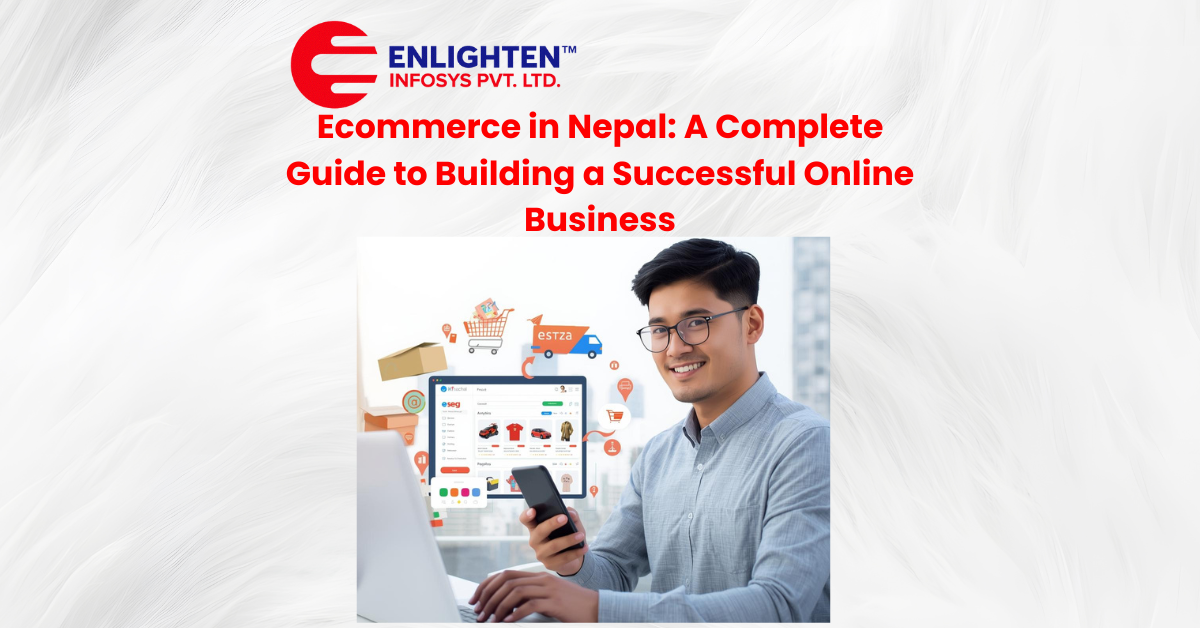

Ecommerce is changing the operational way of businesses in Nepal, opening doors for brands to reach customers beyond physical boundaries. In today’s date, it is not just a trend, infact it is a sustainable business model that lifts startups' business to established companies to scale faster with lower operational costs.
As internet usage is increasing and digital payments are growing, ecommerce in Nepal is becoming a major driver of economic growth. This guide explains everything you need to know, from types of ecommerce to launching a trusted ecommerce website in Nepal.
Understanding Ecommerce and Its Growing Role in Nepal
Ecommerce refers to the buying and selling of products or services through digital platforms. In simple terms, e commerce allows customers to browse, compare, and purchase a product online without visiting a physical store.
In Nepal, factors such as more usage of smartphones, social media influence, and improved logistics have increased ecommerce business. Many local brands are shifting online to compete with international players, to expand their reach, and to establish a reputation.
If you are planning long-term digital growth, understanding how e commerce fits into the broader digital ecosystem, alongside SEO and marketing, is essential. Insights from this guide on The Importance of SEO in 2025: Why Your Business Can’t Ignore It help to understand why visibility is critical for online success.
Types of Ecommerce Models You Should Know
Choosing the right ecommerce model is critical for sustainability and scalability. The most common types include:
B2C E-commerce
Business-to-Consumer is the most popular e-commerce model in Nepal. Many categories, such as online clothing stores, electronics sellers, and grocery platforms, fall into this. Here, businesses sell directly to end customers through an e-commerce website.
B2B E-commerce
In B2B e-commerce, businesses sell products or services to other businesses. This model is for wholesale, manufacturing, and service-based industries in the context of Nepal. So yes, e-commerce can be both B2B and B2C, depending on your target audience.
C2C and C2B Ecommerce
Platforms enabling customer-to-customer sales or individuals offering services to companies are emerging, driven by social commerce and marketplaces.
How to Start an Online Store in Nepal with Ecommerce
Launching a successful e-commerce business in Nepal requires a structured approach built on trust and user experience.
1. Choosing Your Niche and Products
Start by identifying market demand and competition. Profitable e-commerce niches often solve local problems or offer convenience to people.
2. Register Your Business
Register your company according to Nepali regulations and ensure its compliance with tax and legal requirements to build credibility.
3. Build a Professional E-commerce Website
Your e-commerce website should be fast, secure, and mobile-friendly. It builds trust and improves conversion rates.
In order to avoid costly mistakes, partner with experienced professionals who can help. Resources like Best Digital Marketing Agency in Nepal: How to Choose the Right One provide valuable guidance for selecting the right digital support.
Best E-commerce Platforms for Small Businesses
Selecting the right platform is a foundation of your e-commerce success. The following are some of the popular and reliable platforms:
- Shopify – It is ideal for beginners and also scalable for e-commerce business growth, as it is known for security and is also easy to use (https://www.shopify.com).
- WooCommerce – It is a flexible WordPress-based solution for customized e-commerce website development.
- Magento – It is best for larger and more complex e-commerce operations.
Each platform offers different levels of customization, cost, and scalability. Everyone should choose according to their technical capacity and business goals.
Reliable Payment Gateways for Nepali Ecommerce Sites
Trustworthy payment systems are essential for e-commerce credibility. The following are the reliable options in Nepal :
- eSewa – It is widely used and trusted for local e-commerce transactions.
- Khalti – It is also popular for mobile-based payments and utility integrations.
- IME Pay –It is suitable for both domestic and cross-border e-commerce business needs.
For regulatory guidance on digital payments, Nepal Rastra Bank provides official frameworks and updates (https://www.nrb.org.np).
Ecommerce Web Design: Building Trust and Conversions
An e-commerce website should be properly designed as it directly impacts sales and brand authority. The following are some important factors an e-commerce design should contain:
- Clear navigation and product categorization make it easy for customers to browse and use.
- Fast loading speeds and mobile responsiveness are highly preferred nowadays, as people highly prefer mobile for work.
- Secure checkout and transparent policies, as people don't want any trust issues.
Marketing and Scaling Your Ecommerce Business in Nepal
To grow a sustainable e-commerce business, the key factors are viability and engagement.
Social Media platforms such as Facebook and Instagram are powerful for Nepali e-commerce, especially when paired with strategic content. Learn how brands utilize these channels effectively in Social Media Marketing: A Strategic Growth Engine for Businesses in Nepal
Explore more from Investopedia to gain more knowledge.
Final Thoughts
E-commerce in Nepal is no longer optional. It is a strategy that every business can take advantage of for long-term growth. By choosing the right model, building a trustworthy e-commerce website, and utilizing proven platforms and payment gateways, businesses can sustain and grow in a competitive market.